
Loading...
Cold floors, high summer cooling bills, and musty smells are all signs your basement needs insulation. We seal and insulate so your whole home stays comfortable.
Cold floors, high summer cooling bills, and musty smells are all signs your basement needs insulation. We seal and insulate so your whole home stays comfortable.
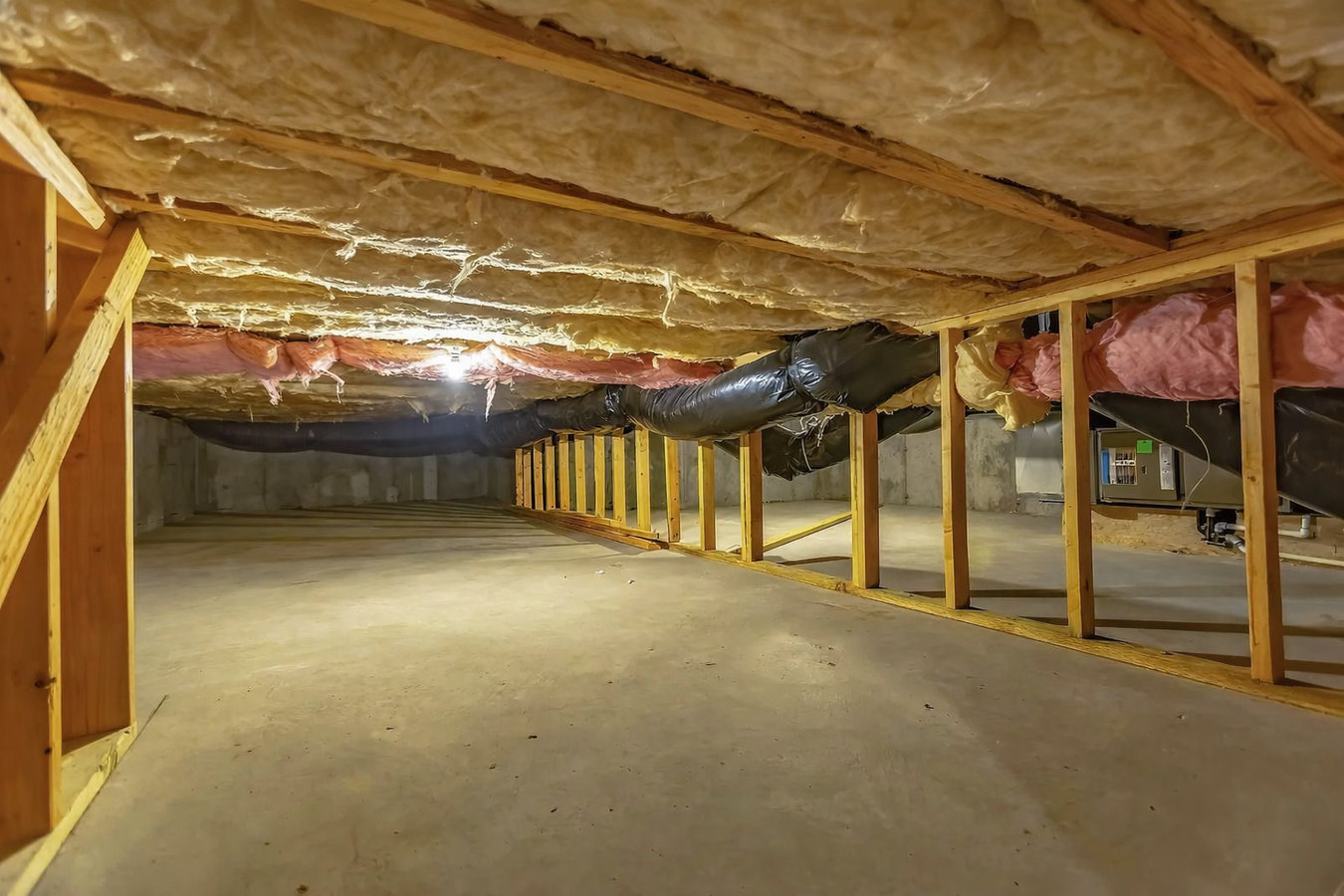
Basement insulation in Denison, TX means adding a thermal barrier to your basement walls or the floor above, stopping heat and cold air from moving between your unfinished space and your living areas. Most jobs are completed in one to two days for an average-sized home.
Without that barrier, your basement acts as a direct conduit between the outdoor temperature and your floors, kitchen, and living room. In Denison, that means a hot slab radiating heat upward from June through September, and cold air pushing through the floor framing during winter freezes. The rim joist - where your floor framing sits on top of the foundation wall - is one of the biggest air leak points in older homes and often the first area we address. Basement insulation works closely with crawl space insulation for homes where below-grade moisture is also a factor.
If the floors in your kitchen or living room feel noticeably cold during a North Texas cold snap, heat is likely escaping through an uninsulated basement ceiling below. This is one of the most common complaints Denison homeowners notice after a winter freeze, and it is almost always fixable with proper insulation between the basement and the floor above.
A persistent musty odor is a sign that moisture is collecting in the basement - often in wall cavities or around the rim joist area. In Denison's humid spring and summer months, this problem tends to get worse on its own. Addressing the moisture and then insulating properly can eliminate the smell and protect your home's structure.
If your cooling costs jump sharply from May through September, your basement may be acting as a heat source rather than a buffer. An uninsulated basement in North Texas absorbs heat from the surrounding soil and radiates it upward into your living space, making your air conditioner work harder than it should.
Walk your basement perimeter and check where the floor framing meets the top of the foundation wall. If you can see light, feel moving air, or notice gaps around pipes and wires, outside air is getting in freely. This is especially common in older Denison homes where original construction did not include any air sealing at these joints.
Every basement insulation job starts with a moisture inspection. We look for efflorescence on the walls, signs of water staining, and any gaps where outside air or moisture is entering. Insulating over a damp wall traps moisture and creates mold - so we address any moisture issues before anything else goes in. Once we confirm the basement is dry, we insulate the walls, the rim joist, or both, depending on what your basement needs. We use rigid foam board on concrete walls for its moisture resistance, spray foam for rim joist sealing where air leakage is significant, and fiberglass batts in framed wall cavities with an appropriate vapor retarder. The right material depends on your specific space, and we explain the options before we start.
For homes where the basement stays unheated, we also insulate the floor above - putting the thermal barrier at the ceiling of the basement rather than the walls. This approach keeps your living space protected without attempting to heat an unfinished space. We pair basement insulation with closed-cell foam insulation in situations where moisture resistance is the primary concern, because closed-cell foam acts as both an insulator and a vapor barrier in one application.
Best for homeowners who want to make the basement itself more comfortable and usable year-round.
Best for homes with drafts, cold floors, and significant air leakage at the foundation perimeter.
Best for homes with unheated basements where protecting the living space above is the priority.
Best for homes with visible staining, musty odors, or known water intrusion before any insulation is installed.
Denison sits in Grayson County on heavy clay soils that expand when wet and shrink when dry - a cycle that repeats with every rain and drought season. Over time, that movement stresses basement walls and foundation joints, opening small cracks where outside air and moisture enter. Homes built in Denison's historic neighborhoods near downtown are particularly affected, since many were constructed in the mid-20th century or earlier with little or no basement insulation. The proximity to Lake Texoma also keeps regional humidity elevated during spring and summer, which makes moisture management a real concern before any insulation goes in. In Denison, you cannot skip the moisture inspection and expect good results.
Summer temperatures in Denison regularly exceed 95 degrees, and an uninsulated basement absorbs that heat from the surrounding soil and pushes it upward through your floors. Homeowners here notice the biggest payoff in summer, when a properly insulated basement helps the whole house stay cooler without the air conditioner running constantly. We serve homeowners throughout the region, including in Sherman, TX and Pottsboro, TX, where the same clay soils, lake humidity, and older housing stock create the same challenges.
Tell us your basement size, whether it is finished or unfinished, and what you have been experiencing. We respond within one business day and come prepared to assess your specific situation.
We walk through your basement and inspect the walls, rim joist, and floor framing for moisture, air gaps, and existing insulation. This visit typically takes 30 to 60 minutes, and we explain what we find in plain language before recommending anything.
You receive an itemized written estimate covering what areas we will insulate, what materials we will use, and the total cost. Take time to compare estimates - price differences often reflect differences in what is included.
Most jobs take one to two days. You can stay home during the work - the crew stays in the basement. When complete, we walk you through the finished insulation, point out anything noted during the job, and leave the space clean. You can use the basement right away.
Free estimate. No pressure. We inspect your basement thoroughly before recommending anything.
(903) 415-9273We inspect every basement for moisture before any insulation goes in. Skipping that step is how a good-looking job turns into a mold problem within a season. We flag moisture issues upfront and address them first - not after the fact.
The clay soils common throughout Grayson County create specific crack and moisture patterns in basement walls. We know what to look for and how to seal those spots properly before insulating, which reduces the chance of problems down the road.
Every basement job is documented from the written scope through completion, and we provide references from recent local projects on request. You know exactly what will be done, with what material, before work begins.
Your estimate itemizes every area we will insulate, the materials we will use, and the full cost. No line items added at the end. If we find something unexpected during installation, we tell you before we proceed - not after.
Every basement insulation job we do starts with an honest assessment and ends with a walkthrough so you can see the finished work. That process protects you and makes sure the insulation actually performs the way it should in Denison's climate.
Rigid, moisture-resistant foam that seals and insulates basement walls and rim joists in one application.
Learn MoreInsulation and air sealing for crawl spaces, addressing the same moisture and thermal challenges as basement work.
Learn MoreSummer heat is on its way - lock in your install date before Denison temperatures peak and your cooling bills climb.