
Loading...
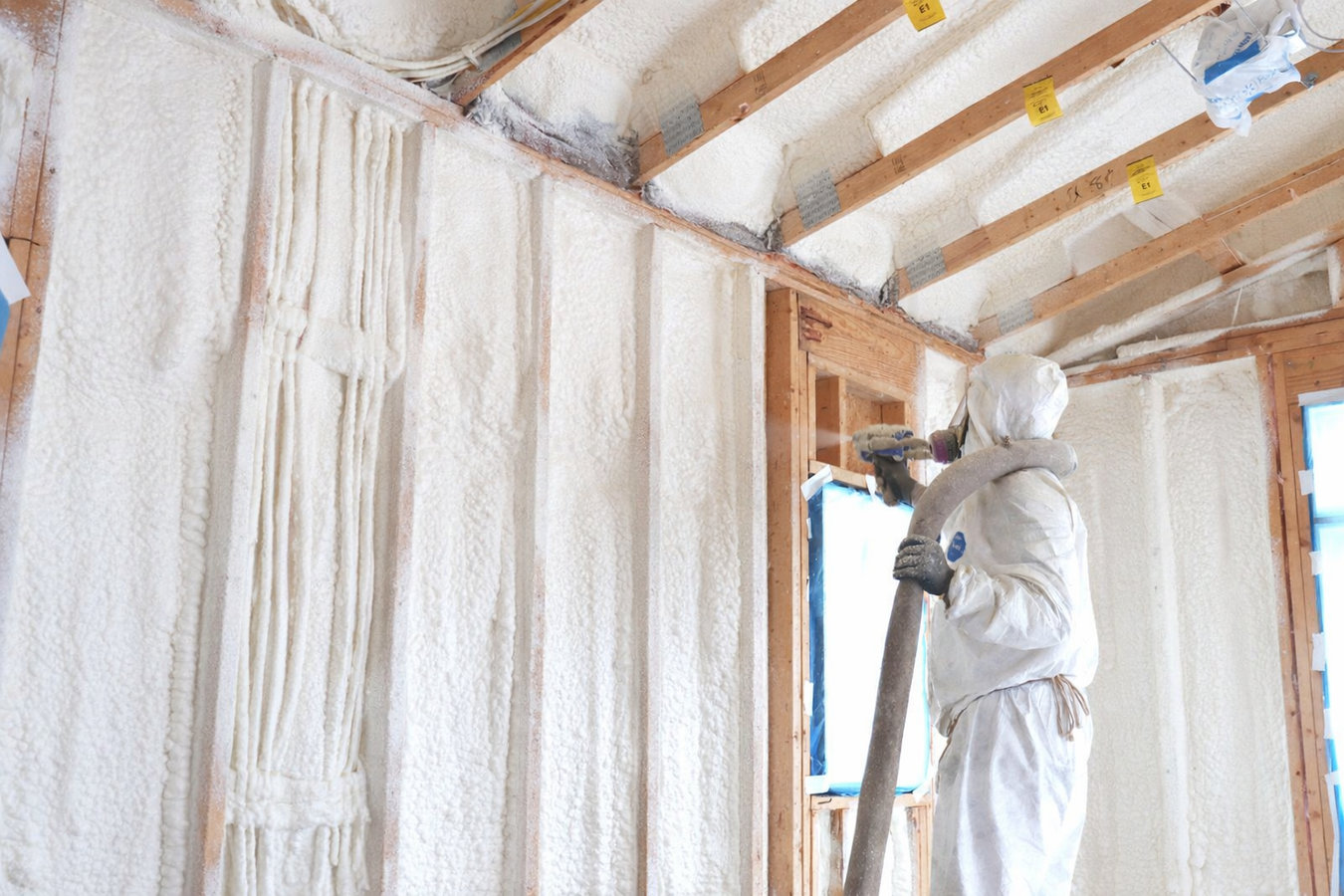
Closed-cell foam seals air gaps and resists moisture in one application - a stronger fit for Denison's hot, humid summers than materials that only insulate.
Closed-cell foam seals air gaps and resists moisture in one application - a stronger fit for Denison's hot, humid summers than materials that only insulate.
Closed-cell foam insulation in Denison, TX is a two-part spray-applied material that expands and hardens into a dense, rigid layer, sealing air gaps and insulating in a single application. Most residential jobs - an attic, a crawl space, or a set of wall cavities - are completed in one day.
Unlike fiberglass batts or blown-in materials, closed-cell foam bonds tightly to the surface and will not sag, shift, or absorb moisture over time. That combination of air sealing and moisture resistance makes it especially well-suited to Denison's climate, where summer humidity stays high and crawl spaces near Lake Texoma are particularly prone to ground moisture intrusion. It is one of the few insulation materials that addresses both problems at once. For homeowners comparing foam options, open-cell foam insulation is a softer, lower-density alternative better suited to interior applications where moisture resistance is less of a concern.
If your cooling costs in June, July, and August feel out of proportion to the size of your home, conditioned air is likely escaping through gaps in your insulation or air barrier. In Denison, where summer heat is intense and air conditioners run for months, even small insulation gaps can add up to significant wasted energy across the season.
If a bedroom, a bonus room over the garage, or a room with exterior walls on multiple sides always feels warmer than the rest of the house, that is a classic sign of inadequate insulation in that area. The problem is usually in the walls or ceiling of that room, and it tends to get worse as the home ages.
Hold your hand near an electrical outlet on an exterior wall on a hot summer day. If you feel warm air coming through, your wall cavity has gaps connecting the inside of your home to the outside. This is especially common in older Denison homes where no insulation was installed in the walls during original construction.
Homes near Lake Texoma and in Denison's older neighborhoods can develop moisture problems in crawl spaces after heavy rain. A persistent musty smell from the floor, or visible moisture on the underside of your floor joists, suggests ground moisture is entering unchecked - a problem closed-cell foam on the crawl space walls and rim joist can directly address.
We apply closed-cell foam in the areas of your home where both air sealing and moisture resistance matter most - attic decks and rafters, crawl space walls and rim joists, wall cavities in older homes with no insulation, and foundation perimeters. Before any spraying begins, we mask off surfaces that should not be coated - HVAC equipment, electrical panels, and finished surfaces nearby - and we walk you through the scope of work so you know exactly what areas are being covered and at what thickness. The foam itself expands and hardens within seconds of application, and most jobs are complete within a single day.
Closed-cell foam is one part of a broader set of options we offer. For homeowners focused on the full picture, spray foam insulation covers both open-cell and closed-cell applications and is a good starting point if you are not sure which type is right for your situation. For homes with separate moisture and insulation needs in below-grade spaces, we often combine closed-cell foam with other approaches as part of a broader crawl space or basement project.
Best for homeowners who want to create a conditioned attic space and eliminate the attic floor as a heat and moisture pathway.
Best for homes with ground moisture concerns near Lake Texoma or in low-lying Denison neighborhoods.
Best for homes with drafts at the foundation perimeter where the floor framing meets the top of the foundation wall.
Best for older Denison homes with empty wall cavities that need insulation without removing drywall.
Denison was founded in 1872 as a railroad town, and a significant share of its housing stock dates to the mid-20th century or earlier. Homes from that era were built with little or no wall insulation and minimal attic coverage - standards were simply different then. Closed-cell foam can be injected into existing wall cavities through small drilled holes, so older Denison homes can be upgraded without tearing out drywall. That makes it one of the few insulation options that works within an existing structure rather than requiring a full renovation. The summer heat here - with temperatures regularly in the upper 90s and humidity staying high from June through September - means your air conditioner is fighting a continuous battle, and any gap in your home's envelope contributes directly to higher electric bills every month.
Denison's proximity to Lake Texoma also adds a moisture dimension that most insulation materials are not designed to handle on their own. Crawl spaces and lower-level areas in homes throughout the area can experience ground moisture and humidity intrusion, particularly after heavy spring rain. Closed-cell foam on the crawl space walls and rim joists creates a sealed environment that keeps that dampness from working its way upward. We serve homeowners across the region, including in Durant, OK and Ardmore, OK, where the same combination of summer heat and moisture pressure applies.
We ask about your home - its age, size, and which areas you want insulated. Most contractors schedule a free on-site visit rather than quoting over the phone, because the actual condition of your attic, crawl space, or walls matters to the final price. We respond within one business day.
We walk through your home and inspect the areas you want insulated - measuring the space, noting access challenges, and looking at what is already there. You receive a written estimate within a day or two that covers materials, thickness, and total cost.
Before the crew arrives, you clear the work area and ensure access to the spaces being sprayed. On installation day, we mask off surfaces, spray in layers, and complete most residential jobs in a few hours. Plan to be out of the treated area during the work and for two to four hours after.
Once the foam has cured and the space is ventilated, we walk you through the finished work so you can see the coverage before we leave. If a permit was required, your contractor handles scheduling the city inspection before any walls are closed up.
Free estimate. No obligation. We walk your home and explain exactly what we find before recommending anything.
(903) 415-9273With closed-cell foam, the coverage is visible - you can see the thickness, check the edges, and confirm even application before the crew packs up. We walk every job with you at the end so nothing is left to guesswork or trust.
Many homes in Denison's established neighborhoods were built with empty wall cavities and minimal attic insulation. We have direct experience retrofitting closed-cell foam into older wood-frame and brick-veneer homes throughout Grayson County without major demolition.
We follow installation practices aligned with the Spray Polyurethane Foam Alliance, the national trade body for spray foam contractors. That means correct thickness, proper adhesion, and safe re-entry procedures - not shortcuts.
We tell you exactly when it is safe to return to the treated area before we start spraying - not after. If a large area is being done, we recommend you plan to be out for the morning. You never have to guess or rely on a vague answer.
Closed-cell foam installed correctly is one of the most durable insulation upgrades a Denison homeowner can make. We treat every job as an investment in your home and in your comfort through every summer that follows.
A softer, more flexible foam option for interior applications where moisture resistance is less of a concern.
Learn MoreAn overview of all spray foam insulation options - open-cell and closed-cell - to help you choose the right fit for your home.
Learn MoreSummer is the hardest season on an under-insulated home - lock in your installation date before the heat peaks and your cooling bills climb.